Approve the Details Before Confirming the Specification
Compare the selected sample with the agreed brief, then record each accepted detail and open point. This buyer checklist helps connect a physical hat, its artwork and its written specification.
Match the Material and Component Scope
Identify the sample by style, colour, size and revision before beginning your review. Keep the drawing, material reference and artwork file beside it. If a sample represents only part of the proposed design, state that scope in the record.
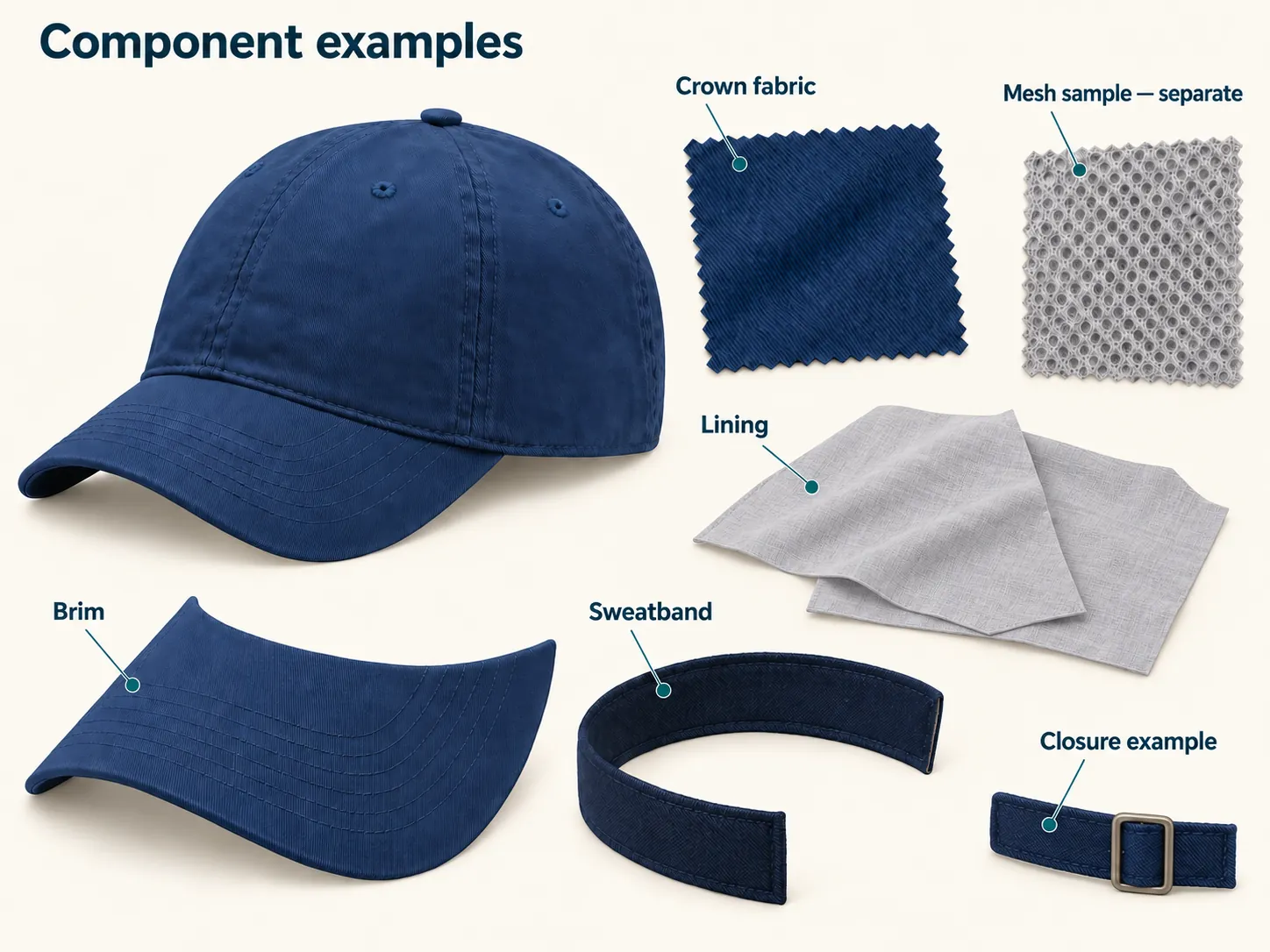
Check the outer crown, brim covering, lining, sweatband, closure and trim individually. A fibre percentage for the main fabric does not automatically describe every component. Compare agreed material references and note any substitutions or details requiring confirmation.
Check Fit, Crown and Brim Together
Use the agreed measurement points and units. Record the size under review, crown dimensions where relevant, brim dimensions and closure setting. Confirm any measurement tolerances for the project rather than introducing a new acceptance limit during review.
Assess the sample on the intended wearer or an appropriate agreed reference. Circumference alone does not describe crown depth or the way a brim sits. For multiple sizes, identify which versions have actually been reviewed and which still need confirmation.
Children’s Fit and Detachable Components
For a children’s hat, state the intended age group, destination and wearing context in the brief. Review the selected size and crown fit on the agreed reference, then list straps, toggles, patches and other parts that may detach. Ask which attachment assessments and destination-specific requirements must be resolved for that exact design before approval. A comfortable fit or a visual check does not settle those separate requirements.
Review a Reversible Hat in Both Directions
For a reversible bucket hat, identify sides A and B and review the sample with each side facing out. Record fit, brim shape, seam appearance, label visibility and decoration on both sides. Check whether a logo or attachment affects the opposite surface, and agree which side-specific materials and artwork are accepted. Do not carry an approval for one wearing direction over to the other without reviewing it.
- Record the measurement method as well as the result.
- Describe a fit issue by its location and wearing effect.
- Keep adjustable closure travel separate from a stated size range.
Review Colour, Stitching and Finish
Compare colour using the agreed reference and suitable, consistent viewing conditions. Screens and photographs support discussion, but use the selected physical reference when the project requires a precise colour decision.
Look around panel joins, the brim edge, internal band and closure attachment. Note loose threads, uneven appearance or an unwanted change in shape with a marked photograph and a specific location. Assess finish against the agreed design; record intended washed or distressed effects as part of that design.
For seam and crown review, compare the front, rear and both sides against the agreed sample or drawing. Note the location of uneven joins, unexpected puckering or a left-to-right difference instead of recording only a general impression. For washed or distressed designs, agree a physical reference or a set of acceptable appearance examples, including the extent and location of fading or distressing. Identify the accepted range so an intended variation can be distinguished from a concern.
Approve the Artwork and Supplied Trim
Check the exact artwork revision, wording, orientation, dimensions and location on the complete hat. Inspect decoration near seams, curves and attachments from the views that a wearer or customer will see.
Include patches, labels, cords, bands and other specified accessories in the same review. Record their colour, position and attachment where applicable. A separately approved artwork file still needs to be connected to its appearance on the selected hat.
For a patch, rope, concho or other trim, identify the attachment method and inspect the relevant outside and accessible inside areas. Record visible stitching, backing, exposed edges and placement against the agreed reference. If attachment strength or durability matters to the project, agree the assessment method and acceptance requirements for the selected component rather than assuming that a neat appearance proves performance.

Keep Test Evidence Attached to Its Scope
If your market or intended use requires testing, identify the required claim, test method, product version and report scope before approval. A visual sample review does not establish a quantified performance rating or regulatory compliance.
Ask which components, colours and decorated versions the evidence covers. Keep any relevant reports with the specification and resolve missing evidence before approving the associated requirement. This checklist does not set an inspection sampling standard or a laboratory procedure.
Define the Claim Before Reviewing the Evidence
Do not treat waterproof and water-repellent wording as interchangeable approval items. Ask what the proposed claim means for the selected hat, which fabric or finish it describes, and whether seams, decoration and the complete construction are included. Record the intended conditions and request the relevant method and result before accepting that wording.
For a mesh or perforated cap, record where the openings occur and assess the selected sample in the intended use. Visible openings describe construction; they do not establish a measured breathability rating. If a quantified result is required, agree the method and the exact sample to assess. Apply the same claim-to-evidence record to protective or thermal wording: identify the product version, conditions, method and result that support the proposed claim.
Match Each Document to What It Covers
Read the named holder and scope of each certificate or report. A document may relate to a company, a particular facility, a material or an identified finished hat; those scopes should not be substituted for one another. Match the relevant names, product or material reference, covered versions and stated validity to your requirement. Keep an unresolved scope question open rather than using a general document as approval of the exact hat.
Create a Record Another Person Can Follow
Use a dated record that identifies the sample, supporting files and the person making the decision. Separate accepted points from requested changes and unresolved questions. After a revision, state which earlier version it replaces.
Give material, colour, fit, artwork and trim their own decision lines. Mark each accepted, awaiting revision or awaiting evidence, with the relevant sample or file reference. Approval of one line should not silently approve a different component or an unreviewed size. For a repeat order, keep the dated record with the accepted drawing, artwork revision, material and colour references, measured size breakdown and any agreed physical sample reference.
| Record area | What to identify |
|---|---|
| Sample reference | Style, colour, size, version and date |
| Accepted specification | Material, construction, measurements, artwork and trim |
| Open points | Required change or evidence, owner and review status |
| Decision | Accepted scope, exceptions and the next agreed action |
Keep the Reference Useful for a Repeat Order
Retain your approval record and identify changes when requesting another order. Confirm the current material, artwork, size breakdown and commercial terms rather than relying only on an old photograph. Discuss which reference samples and files will be used for the new project.
Document a Concern After Delivery
Identify the order, style, colour, size and carton or batch reference where available. Record when the concern was noticed, how many units were checked and how many were affected. Keep clear overview and close-up photographs, a description of the issue and the agreed approval reference for comparison. Retain the relevant packaging and affected examples while discussing the next step. Contact Relia Hats with this record and refer to the order’s agreed reporting and remedy terms; this checklist does not set a reporting deadline or promise a particular remedy.