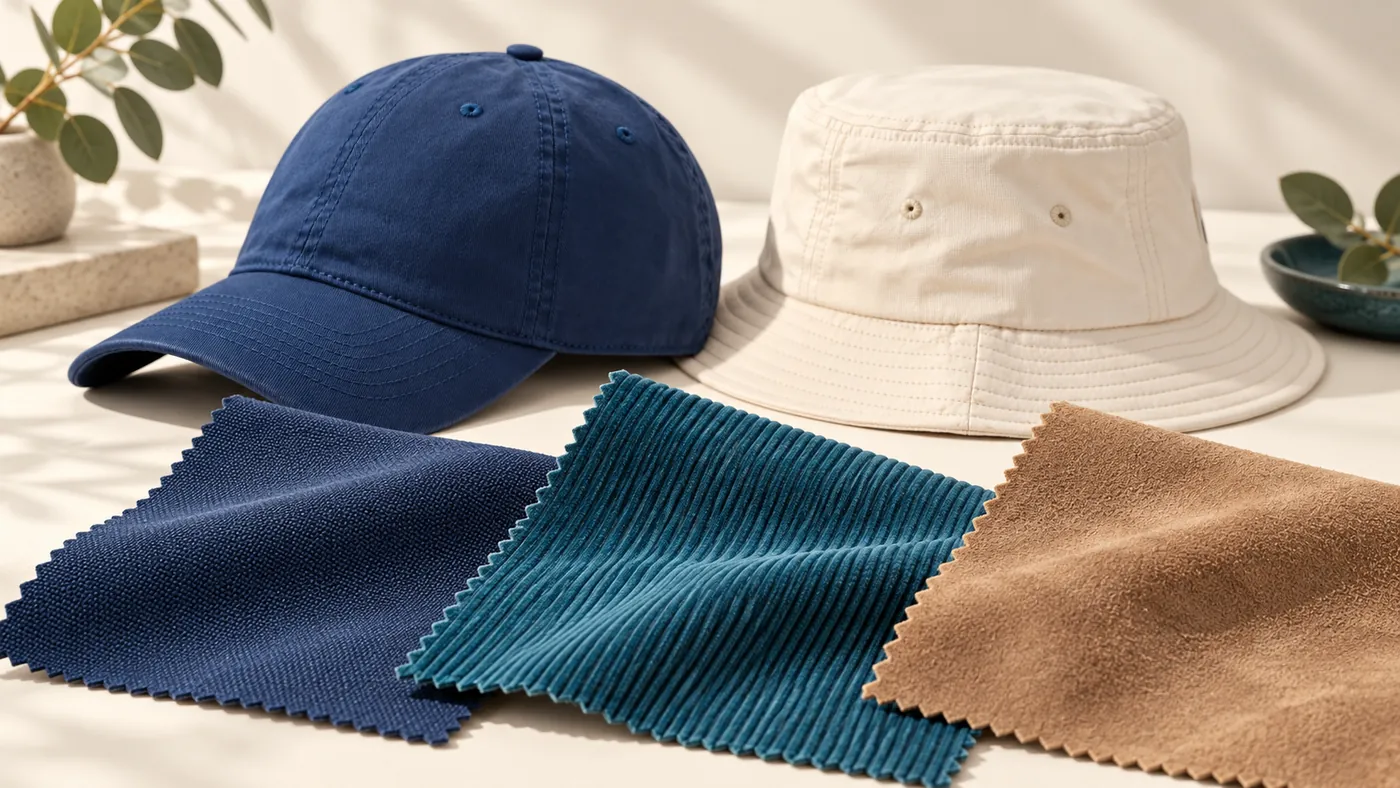
A useful hat material specification answers several questions at once: what fibres are present, how the material is constructed, which component it describes and what finish has been selected. Cotton, corduroy and suede-style are useful words, but they do different jobs. Reading them separately helps a buyer turn an attractive reference hat into a specification that can be discussed, sampled and approved.
This guide uses material contrasts from the Relia Hats catalogue to explain that reading process. The examples are starting references for a custom inquiry. Your final brief should identify the chosen material and the parts it covers, rather than assume that every part of a hat shares the same composition.
Separate Fibre, Fabric Construction and Appearance
Begin with three headings in your notes. Under fibre composition, record names such as cotton, polyester or wool and the stated percentages. Under fabric construction, record the selected fabric description. Under appearance and finish, record the surface or visual effect you want the sample to demonstrate. This simple separation prevents one familiar word from carrying more meaning than it should.
For example, corduroy identifies a fabric with a distinctive ribbed surface. It does not, on its own, give the fibre percentages. A cotton requirement therefore needs an explicit composition statement even when the reference looks like a familiar corduroy cap. The width and appearance of the ribs are further design details to compare on the selected material.
Likewise, a suede-style description helps communicate the desired surface, but it does not establish animal origin or a complete material recipe. A photo may show colour and texture; it cannot supply missing fibre information. Treat those missing details as questions for the project discussion, then include the confirmed answer in the written brief.
Use Actual Hat References to Test Your Reading
The catalogue provides useful contrasts because the same broad appearance vocabulary can sit beside different material information. Read the exact selected reference rather than transferring a composition from a similar-looking hat. The following examples illustrate the questions to carry into a custom inquiry.
| Catalogue reference | Material information | Question to resolve |
|---|---|---|
| Two-tone five-panel corduroy camp cap | 100% Polyester material; corduroy fabric; faux-suede flat brim | Which components does the polyester statement cover, and what is the brim covering composition? |
| Gray cotton five-panel dad cap | 100% Cotton material | What are the selected fabric construction and the composition of the backing and internal components? |
| Adjustable six-panel polyester felt cap | 100% Polyester material; Felt fabric | Which felt and finish are selected for the supplied cap? |
| Striped wool felt western hat | 100% Wool felt description | How are the felt body, ribbon or rope trim and other components specified? |
The two-tone corduroy camp cap is a particularly useful reminder that corduroy should not be silently translated into cotton. Its faux-suede brim also shows why a whole-hat description needs component detail. You can use the reference to explain a colour arrangement or surface combination while requesting a different, explicitly specified material for your project.
The striped wool felt western hat and the polyester felt cap show another distinction: felt does not automatically mean wool. The fibre statement and the fabric description belong together. Neither example establishes the composition of every band, fastening or decorative piece attached to the hat.
Read Percentages with a Defined Component
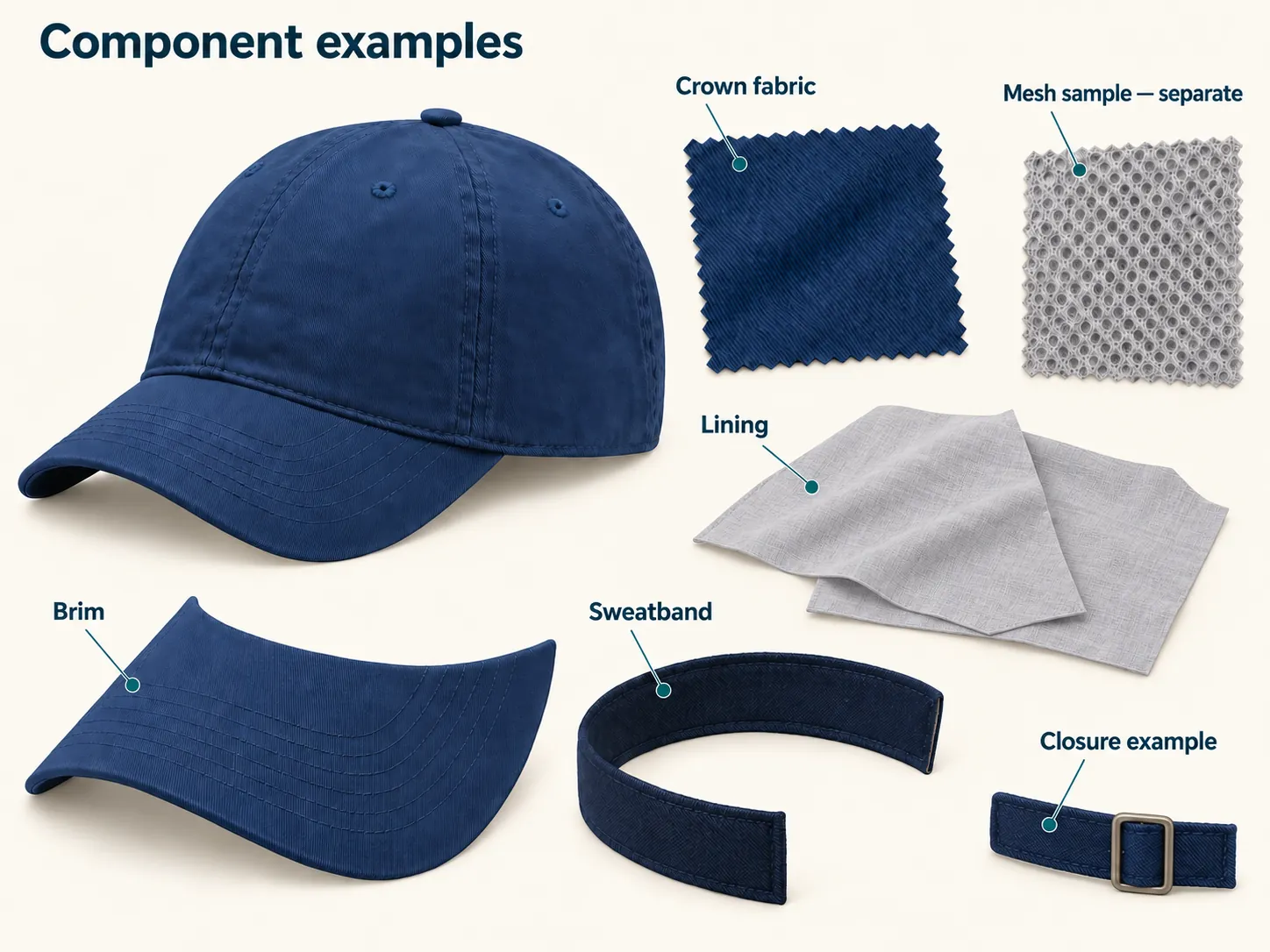
A percentage is useful only when the reader knows what it describes. “100% cotton outer fabric” is more specific than a standalone cotton preference. If the cap has a lining, backing, sweatband, mesh section or separate brim covering, list those parts and ask for their own material information where relevant to your project.
For a blend, keep the actual fibre names and proportions together. Do not simplify a polyester-cotton requirement into “cotton cap” if the proportion matters to the purchasing decision. If the percentages are not yet known, state the desired material direction and mark composition as an open item. That is clearer than inserting a plausible blend ratio.
When reviewing a physical fabric reference, give it a name or code that both parties can use. Note which side and colour are intended for the outside of the hat, and keep a photograph for identification alongside the physical reference where available. If more than one person is approving the project, ensure they are discussing the same swatch and revision. A clear reference makes comments about texture, shade and surface direction easier to act on.
A material statement should also stay attached to the selected version. If you change the fabric after discussing a reference, update the brief and the sample record. The earlier catalogue description remains useful as a starting point, but the confirmed project material is what the buyer needs to approve.
Ask What Suede-Style and Faux Suede Mean for the Selected Hat
Surface language deserves careful reading because similar-looking materials can have different compositions. If a reference is described as suede-style or faux suede, retain that wording when explaining the appearance you like. Ask separately about the fibre or material composition, backing and any finish applied to the chosen component.
Do not convert faux suede into a claim of animal leather. Equally, do not assign a specific synthetic fibre solely because the description says faux suede. Where actual animal leather is proposed, ask for a clear material identity and the information relevant to your purchasing requirements. The terminology should describe the selected material accurately before it appears in your own product copy.
For a mixed-surface cap, examine the join between the crown and brim as well as the individual materials. Agree the intended shade relationship, texture and finished appearance. A useful approval image shows the complete combination, while the written specification identifies the materials that create it.
Map the Parts Hidden by a Short Product Description
Start the map with the visible crown and brim, then move inside and around the back. You do not need to turn an inquiry into a technical manual. The aim is to identify the components that affect your design, wearing experience or downstream information requirements and give each one a clear place in the conversation.
- Specify the outer crown fabric and identify any different front, side or rear panels.
- Describe the brim covering separately from the intended brim shape and supporting construction.
- Ask which lining, internal band and backing will be supplied where those components matter to the brief.
- Identify mesh sections, closure straps, buckles or other fastenings as distinct components.
- Include patch materials, embroidery, printed artwork, ribbon, cord and labels in the finished-hat review.
Mesh is a good example of a component that needs its own description. A mesh-back cap may combine a solid front with a different rear material. Record the composition of the relevant parts instead of applying the front fabric statement to the entire crown. Visible openings also do not establish a quantified ventilation or protection rating.
For construction and measurement questions alongside the material map, use the materials, construction and fit guide. Keep each question connected to the actual selected hat so that the specification remains manageable.
Approve the Decorated Hat, Including Its Care Information
A fabric choice and a decoration choice eventually meet on one finished object. Review the logo on the actual selected surface, including its dimensions, placement, backing and appearance near seams or curves. A design approved on a screen still needs to be connected to the material and construction of the sample.
Ask for care and handling information for that complete combination. The fabric, decoration, closure, trim and shape may each affect the appropriate instructions. Avoid choosing a washing method or temperature from the fibre name alone. If your project needs a particular cleaning result, describe the requirement during development and ask how it will be assessed.
Include handling and packing questions when the finished shape is important to the design. Ask how the selected brim, crown and decorative components should be supported or stored. Do not infer that a soft-looking fabric makes the complete hat foldable; the finished construction needs its own confirmation.
Similarly, request product-specific evidence for any performance claim that matters to your market or intended use. A material name, seasonal description or textured surface does not establish a waterproof, thermal or sun-protection rating. The sample approval guide explains how to keep a required claim attached to the relevant product version and evidence scope.
Turn Your Material Preference into a Reviewable Brief
Write the brief in a sequence that another person can follow: identify the style, describe the chosen components, state the composition required and attach the colour or texture reference. Then explain the decoration and the details you expect to review on the sample. Put unanswered questions in a separate list rather than allowing them to disappear inside a general material description.
For an illustrative corduroy project, a buyer might ask for a five-panel cap with a selected corduroy crown, a contrasting suede-style brim covering and a front logo. The useful next step is to define the required crown composition, brim covering composition, colours and artwork dimensions. This is an example of how to organize a brief, not a statement of a supplied material combination or a quotation.
Before approval, check that the sample reference and written record describe the same version. If the material, finish or decoration changes, update the affected lines and identify what must be reviewed again. Retain the accepted information for a later reorder rather than relying on a short fabric name to reconstruct the design.
Relia Hats works with customer requirements or drawings, customer-specified materials and customer logos. Send your material brief to Relia Hats with the reference style, desired composition, component questions and intended quantities. Sample scope and project terms can then be discussed for the hat you want to create.