
CUSTOM HATS · CHINA FACTORY
Custom Blank Caps for Your Embroidery Business
Your blank cap is the starting surface for the work your customer will see. We manufacture custom headwear in China and can review the undecorated cap specification you need. Bring your preferred shape, materials and intended decoration process so the blank product is designed around your business.
Explore the project steps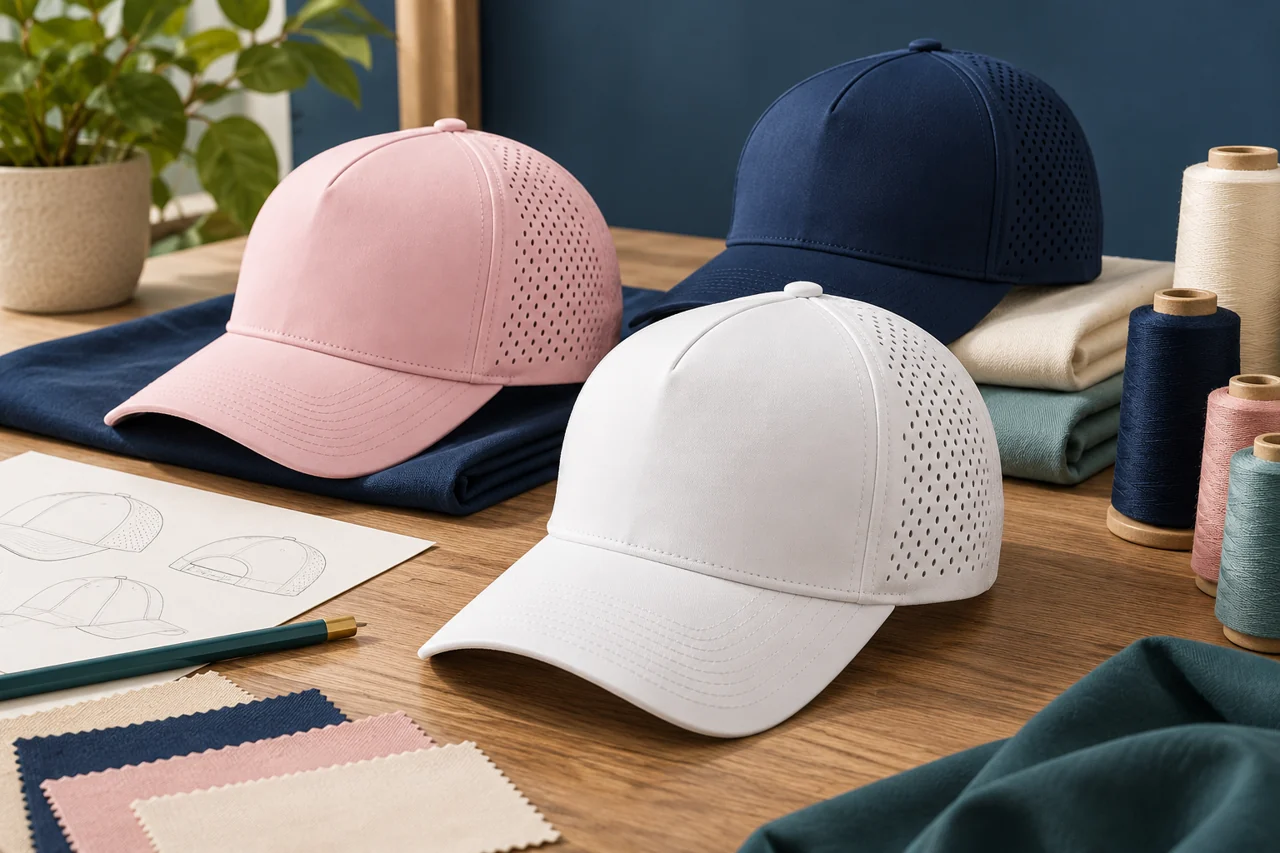
02 / 10
Start with the Decoration You Intend to Apply
Describe the artwork scale, preferred placement and process your team expects to use. Those details help identify the cap construction to review. Keep the blank-product brief specific rather than assuming that every undecorated cap offers the same usable front area.
03 / 10
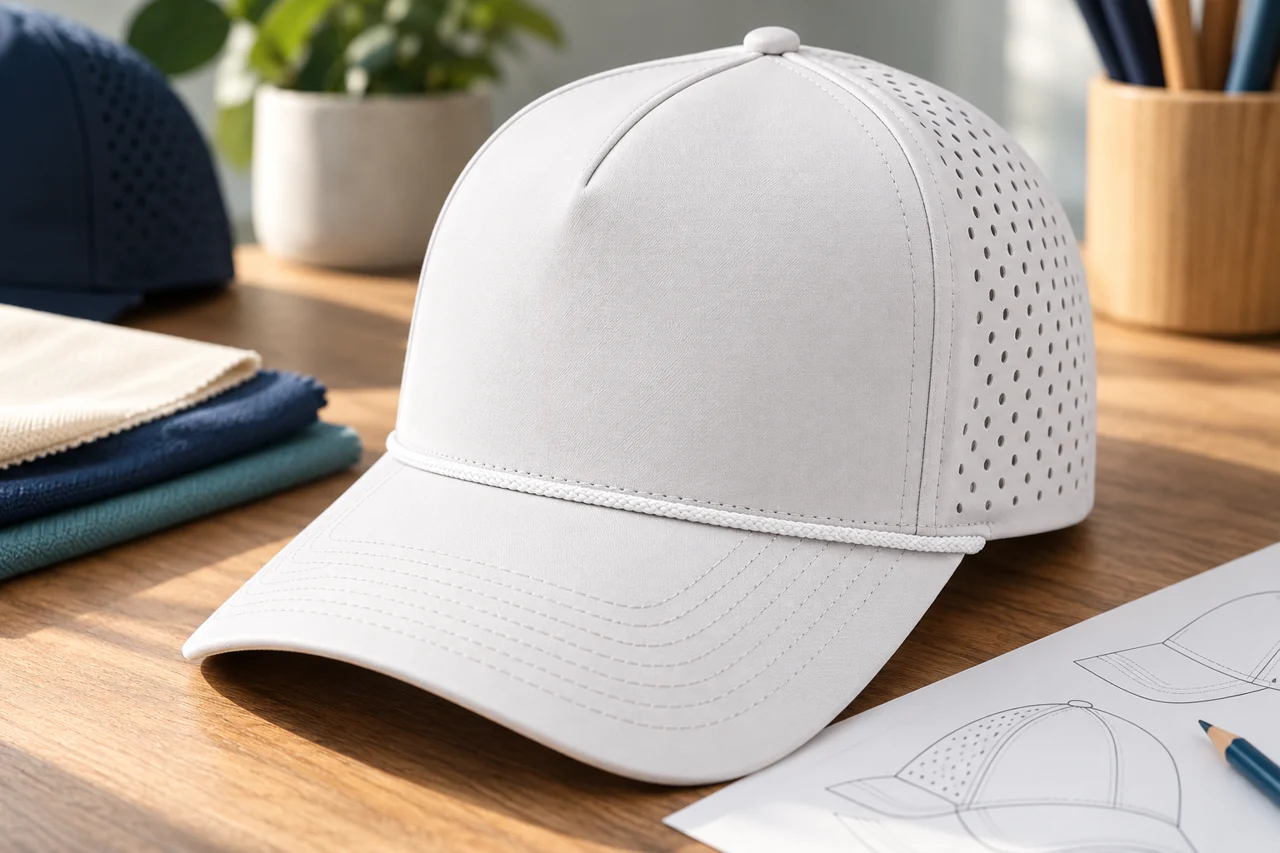
Review the Front Panel and Centre Seam
Panel shape, support and the centre seam influence the surface available for embroidery. Show the area you need on the chosen cap reference. Your own process trial on the selected sample is a useful approval step before a larger blank-cap order is agreed.
04 / 10
Compare Construction by the Actual Requirement
A structured front, softer crown and different panel layout create different blank products. Identify the shape and feel your customers want, then review the decoration area within that construction. A familiar cap name is less useful than a clear set of product and trial requirements.
| Blank-cap detail | Specify | Review |
|---|---|---|
| Front support | Desired structure | Shape and intended process |
| Panel layout | Drawing or selected reference | Seam relationship to artwork |
| Surface material | Exact requirement | Appearance after your trial |
05 / 10
Choose Materials and Colourways Clearly
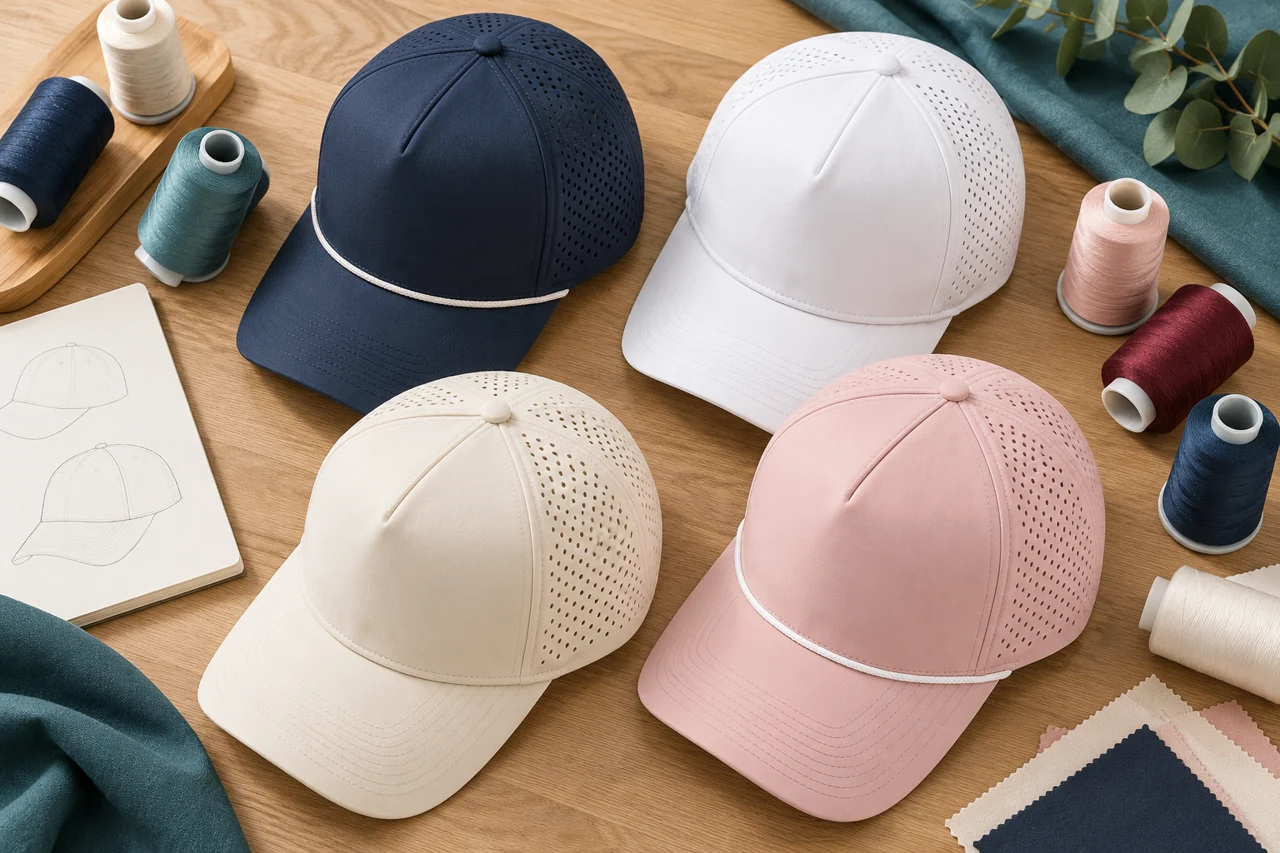
Share composition, surface direction and required colour references. Keep contrasting brim or panel materials separate. We can review your nominated requirements and range plan together. Material planning helps define the cap before your decoration process introduces another set of variables.
06 / 10
Give Inner Components Their Own Scope
Include the inner band, labels, tapes and closure requirements. Tell us which branding components should already be present and which must remain blank. The inside finish is still part of the product your customer receives, even when your business applies the outside decoration later.
07 / 10
Approve the Blank and the Process Trial Separately
First record the cap construction and fit you accept. Then document the result of your intended decoration trial on that version. A process adjustment and a change to the cap are different decisions. Keep both records clear before discussing the wholesale quantity.
- 01Review the blank sample
- 02Run your decoration trial
- 03Record cap and process feedback
- 04Accept the selected blank version
08 / 10
Build a Repeatable Blank Range
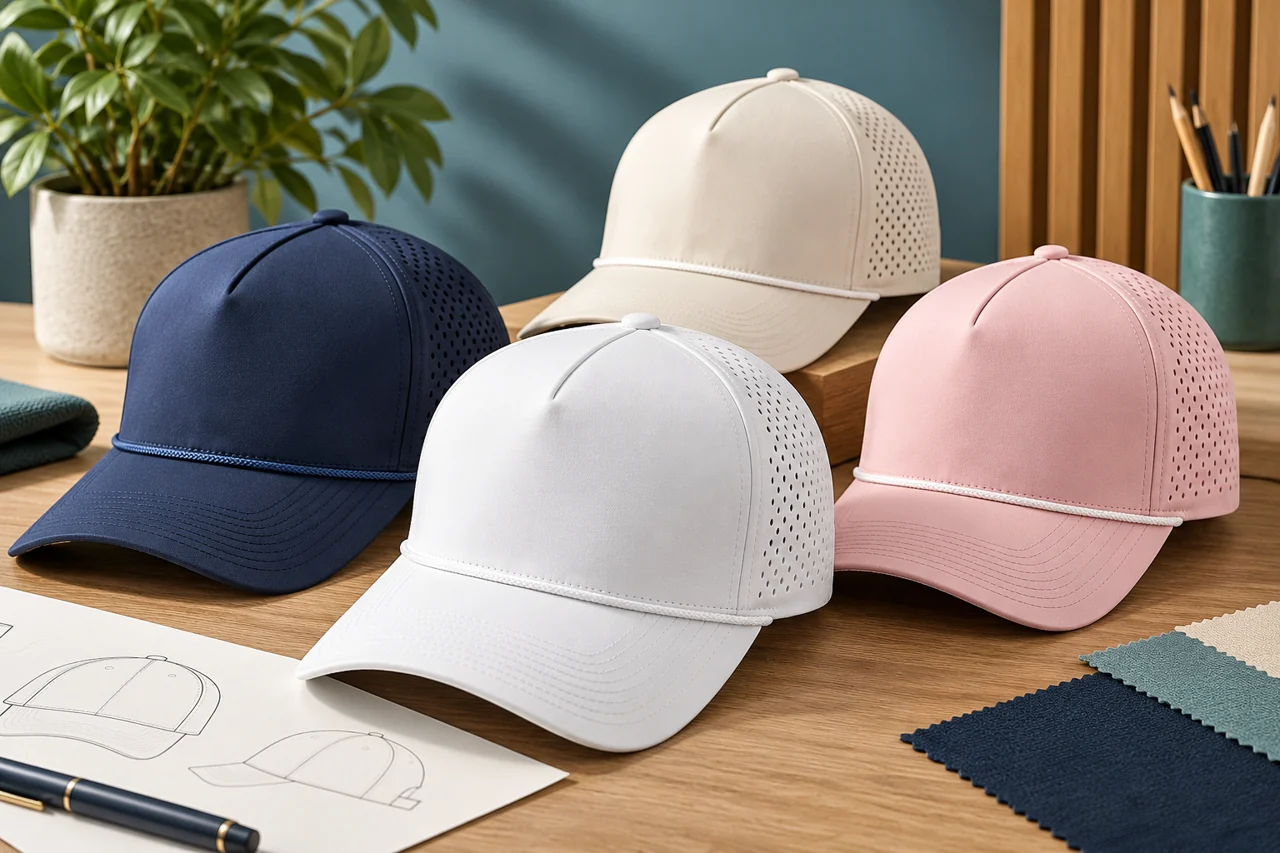
Choose the core colours and sizes your business intends to offer. Identify which versions share a construction and which differ. A clear base specification makes later quantity discussions more useful and keeps a new fabric or closure from being treated as an unchanged reorder.
09 / 10
Quote the Base Product Completely
List quantities by size and colour, with packing, labels and destination. Include any sample work needed for your trial. Minimum quantities, charges and timing are agreed for the actual cap specification and order split, rather than for the general description of a blank cap.
10 / 10
Send Your Blank-Cap Requirements
Send the cap references, front-area needs, material direction and intended decoration process. Add inside-component requirements and quantities by version. Continue with six-panel cap development, sample approval or repeat-order planning for the next connected step.
Qingdao Relia Hats Co., Ltd. · Qingdao, Shandong, China
- Cap construction
- Decoration area
- Material and colour
- Inside components
- Trial requirements
- Version quantities