
CUSTOM HATS · CHINA FACTORY
Private Label Hats for Ecommerce Warehouse Orders
A custom hat order needs to arrive in a form your receiving team can understand. We develop headwear around your design, materials and logo, then discuss the presentation and packing requirements for your sales channel. Bring the warehouse instructions into the project before the product specification is treated as complete.
Explore the project steps
02 / 10
Use the Warehouse's Actual Instructions
Share the current receiving requirements issued for your destination. Product identification, carton marking and individual presentation may vary. We review the applicable scope with you rather than assuming one ecommerce packing arrangement fits every warehouse or sales channel.
- 01Collect receiving instructions
- 02Map requirements to hat versions
- 03Review packing scope
- 04Include it in the quotation
03 / 10
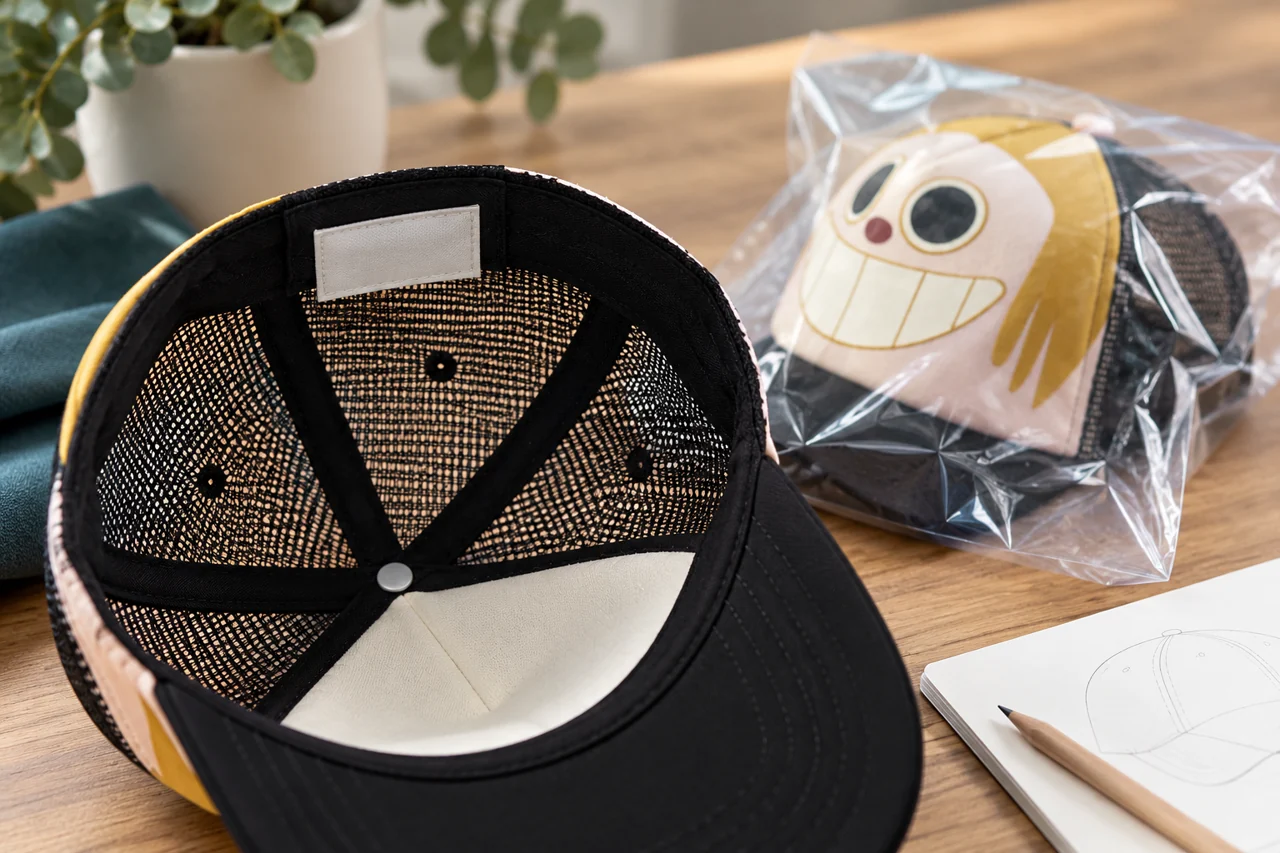
Give Every Product Version a Clear Identity
A change in colour, size, artwork or label can create a separate item in your range. Match those versions to your own identification plan. Keep the product and packing records aligned so the receiving brief refers to the hats you actually intend to order.
04 / 10
Separate Product Labels from Shipping Marks
A brand label, retail identifier and carton mark serve different purposes. Name each one and provide its required content. Keeping them separate makes the approval discussion clearer and avoids treating a correct logo as approval of the information needed for receiving.
| Information layer | Purpose | Input from your team |
|---|---|---|
| Brand label | Product identity | Approved artwork and content |
| Item identifier | Version recognition | Your SKU or receiving instruction |
| Carton mark | Shipment handling | Destination-issued requirements |
05 / 10
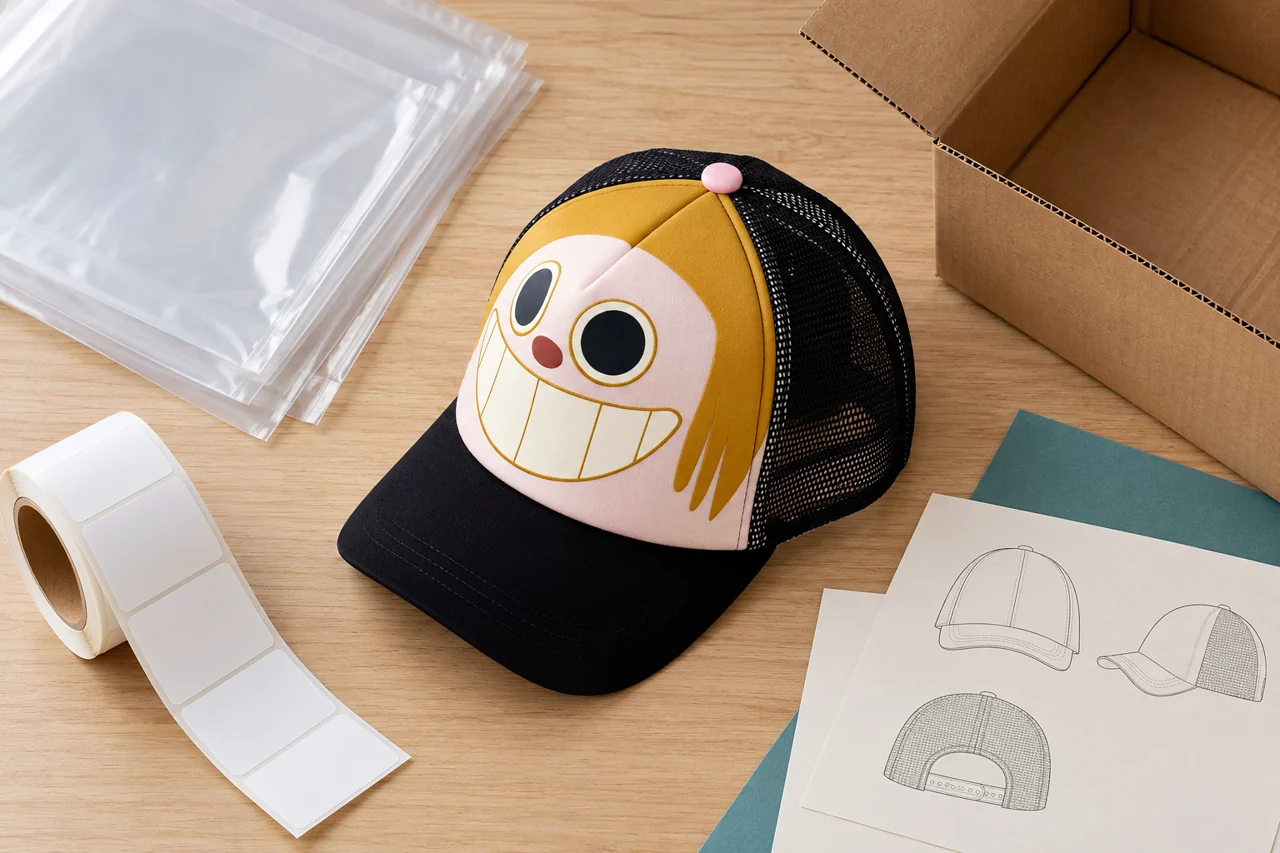
Review Packing with the Hat Shape
A structured crown or brimmed style may need a different arrangement from soft knitwear. Show the packing requirement and the product together. We can discuss how the selected presentation relates to the finished hat, including any separation or shape support to be reviewed.
06 / 10
Keep Branding and Receiving Approvals Separate
Your design team may approve the hat while an operations colleague controls warehouse instructions. Identify both responsibilities. We can bring the decisions together in one project record without assuming that an appearance approval settles every receiving detail.
07 / 10
Confirm the Complete Sample Scope
State which labels, tags and packing pieces need review with the sample. Keep the accepted artwork and item identification versions together. Sample approval planning helps make the review specific, especially when a correct hat could still be paired with outdated presentation information.
08 / 10
Plan the Shipment Split Deliberately
List which versions belong at each destination and whether cartons need to be separated by item. Include those instructions in the proposed order. We review the applicable packing and delivery arrangements with you; a single overall quantity cannot explain a multi-version receiving plan.

09 / 10
Keep Charges and Timing Attached to Scope
Include the product, labels, packing and destination in the quotation discussion. Identify any receiving milestone that matters. Minimum quantities, sample arrangements and timing are agreed for the selected project, with changes to warehouse instructions kept visible as changes to the scope.
- 01Current receiving instructions
- 02Complete version list
- 03Agreed packing arrangement
- 04Project quotation and milestones
10 / 10
Send Your Ecommerce Hat Brief
Share the hat design, artwork, quantity matrix and current warehouse requirements. Add identifiers, packing details and destinations. Continue with private label components, comparable quotations or hat packing to prepare the next connected review.
Qingdao Relia Hats Co., Ltd. · Qingdao, Shandong, China
- Hat specification
- Version and SKU map
- Brand artwork
- Receiving instructions
- Packing requirements
- Destination quantities